Between Strategic Vision and Manufacturing Reality
Industry 5.0 is all about resilience, interoperability, performance, and augmented humans. But in manufacturing, a poorly managed digital transformation project is unforgiving.
A poorly planned digital manufacturing transformation project does not just cause delays.
It can:
- Disrupting the operations of an organization,
- Impact the business revenues
- Undermine business continuity,
- Degrade the perception of "the business" towards IT.
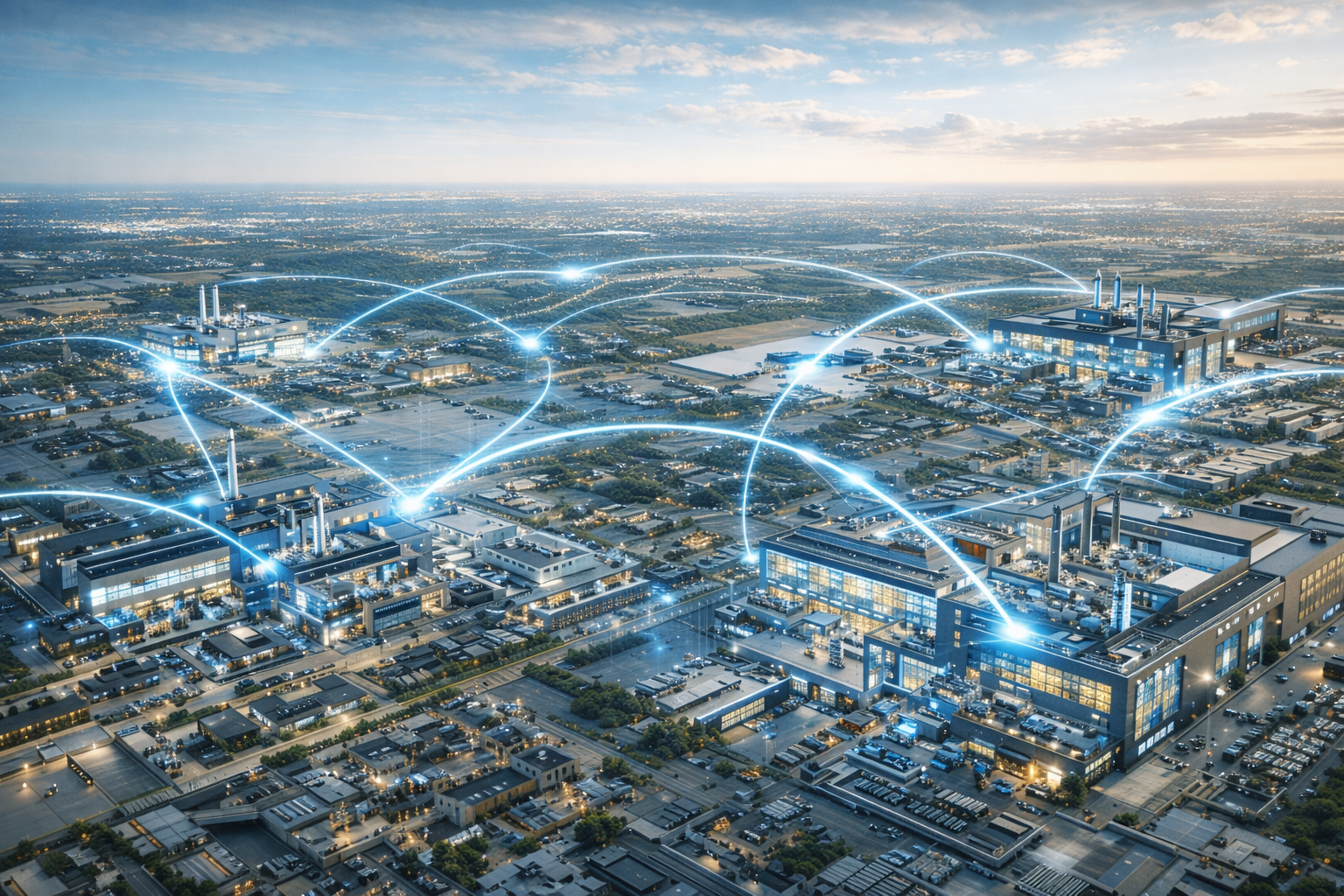
In a multi-site manufacturing context, transformation is not a concept. It is an intervention within a living ecosystem often composed of systems such as:
- SCADA (Supervisory Control and Data Acquisition)
- MES (Manufacturing Execution System)
- Quality Management Systems (QMS)
- Analytical tools (BI)
- Interconnected Legacy systems
- ERP (Enterprise Resource Planning)
- Warehouse Management System (WMS)
The larger the organization:
- The more multi-level dependencies there are
- The more critical the data flows are
- The more migration becomes ecosystemic
- The higher the systemic risks
Industry 5.0 requires:
- A shared vision of value,
- Aligned priorities,
- A shared responsibility,
- Quick and informed decisions,
- Continuous learning (« learning by doing »)
- Visibility
- Protecting the value chain,
- Scalability and maintainability,
- Predictability,
- Sécurity,
- Etc.
But here is the manufacturing reality:
- Every factory is different and has its own unique complexities.
- Operational resources are in short supply,
- Operational resources are in short supply,
- Operations must not be disrupted (as little as possible),
- Etc.
The question is no longer:
"Are we providing the right technologies?"
But:
"Are we doing THE right thing, in the right way, at the right time?"
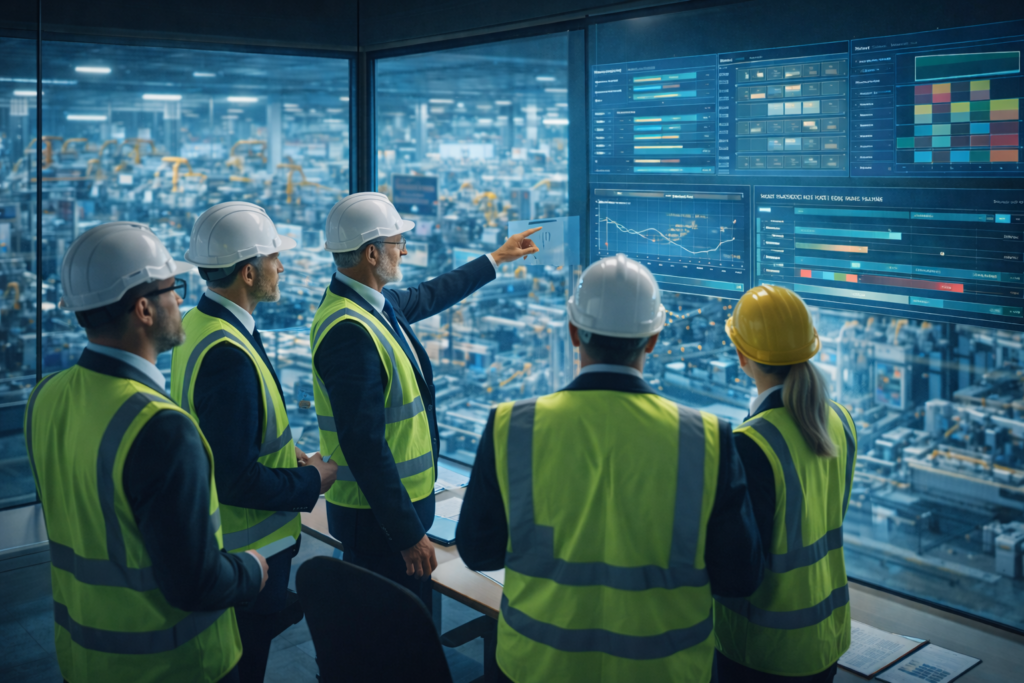
Project Management vs. Strategic Project Management
In a complex manufacturing transformation project, there are two types of deliverables:
1️⃣ Project deliverables (the solution - the product)
2️⃣ Project management deliverables (governance / structure)
A professional in manufacturing project management does not wait for problems to arise. He anticipates them, plan accordingly, and take action.
Without a solid project management architecture, transformation amplifies risks.
In a manufacturing environment:
- Obsolescence creates cybersecurity risks.
- Aging IT architecture threatens business continuity,
- Excessive centralization creates bottlenecks.
- Every hour of downtime is costly.
- Etc.
Without integrated risk management:
- Risks are identified too late,
- The impacts follow,
- Decisions are made under pressure,
- The project becomes an amplifier of vulnerability, ambiguities, and uncertainties.
My approach is based on a clear principle: Project management life cycle tailored to the context.
Risks are not simply documented.
They are integrated into the architecture of the project.
This includes :
- The development and active maintenance of a transparent risk register,
- Escalation and risk management,
- Structured decision-making milestones,
- A rollback plan available at all times,
- A deployment strategy and a commissioning/cutover plan,
An industrial digital transformation project without integrated risk management is nothing but wishful thinking.
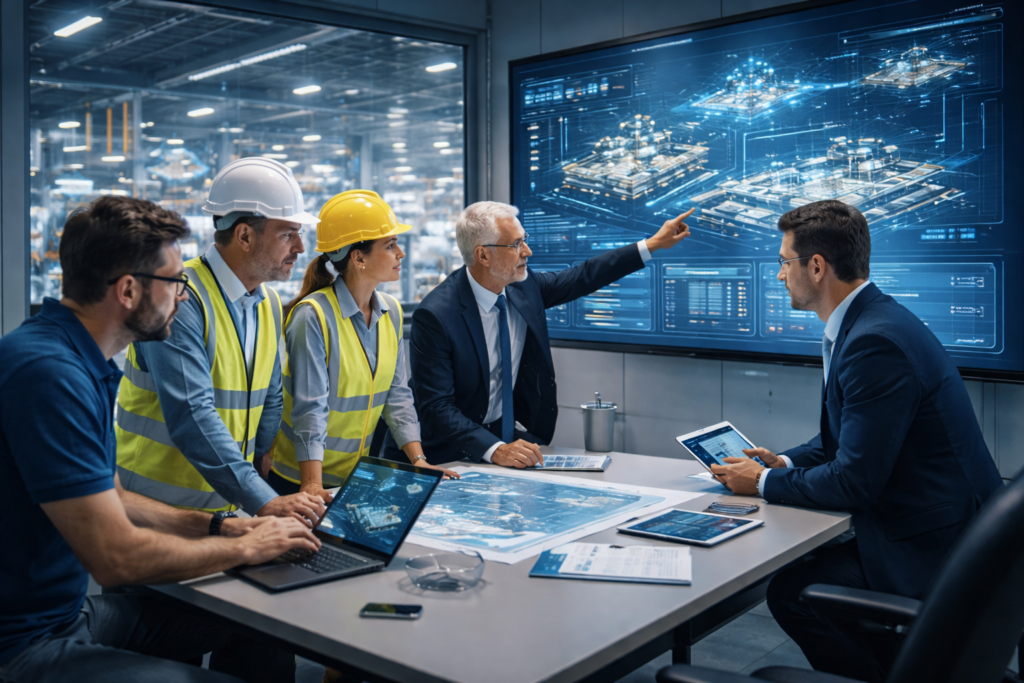
Manufacturing Collaboration is a System
In a multi-site SCADA project:
- IT thinks: infrastructure, cybersecurity, systems, performance, etc.
- Operations think: business continuity.
- Management thinks: strategic value, growth, and future opportunities.
- The integrator thinks: technical execution and contractual delivery.
Without orchestration:
- Validations are taking a long time
- Responsibilities become blurred
- Decisions stagnate
Industry 5.0 is collaborative by definition.
But collaboration needs to be structured.
This means in particular :
- Validate whether the project involves change management,
- Ensure strong, committed business and IT leadership,
- Involve stakeholders early on,
- Implement a clear change management process,
- Develop and maintain a living RACI,
- Ensure mobilization, commitment and ongoing communication.
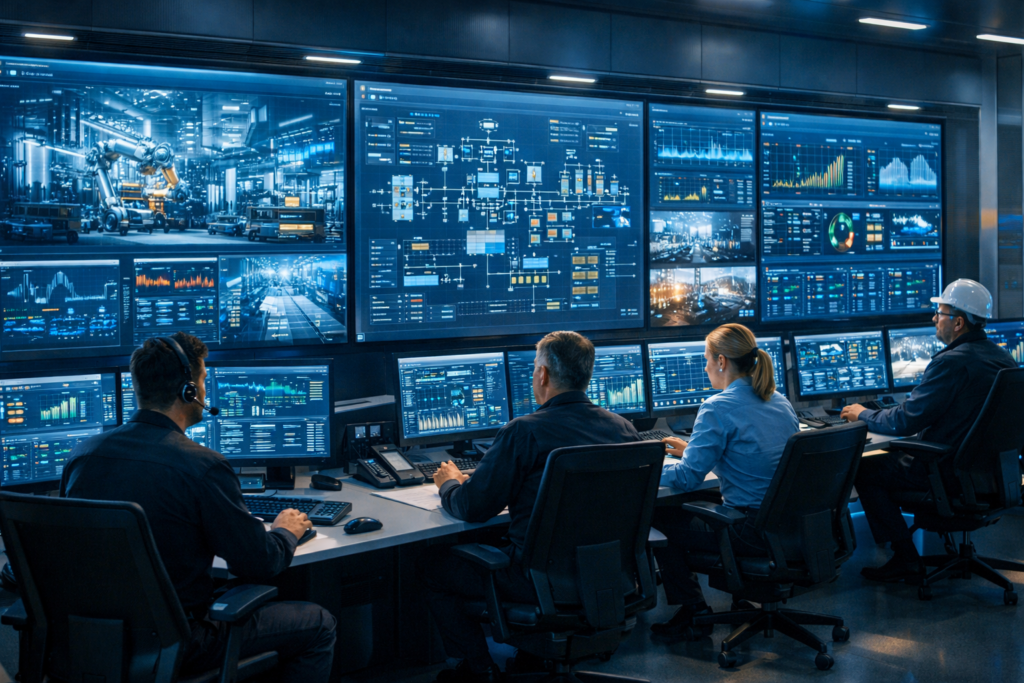
No bureaucratic QA - value-oriented «fit for purpose
Many projects fail here.
We validate technically... but we don't take ownership of the quality.
Thanks to its technical expertise, the integrator plays a crucial role in quality planning.
This should be a shared responsibility between the integrator, IT and the customer («the Business»).
"Doing QA for QA's sake"
Multiplying processes, artifacts and validations indiscriminately creates costly bureaucracy, slows down execution and mobilizes resources on low-value activities.
In a manufacturing transformation context, QA must be applied to the project - not tacked onto it.
It must be :
- Fit for Purpose
- Aligned with real risks
- Proportional to complexity
- Focused on business continuity
- Designed for acceleration, not braking
The aim is not to produce proof of conformity, but to secure reliable, long-lasting delivery.
Examples of standard deliverables produced by a quality-conscious integrator:
- Test protocols
- Commissioning / Cutover Plan
- Build Book and rollback plan
- Coordination workshops with stakeholders
Examples of standard IT deliverables:
- Complete IT architecture documentation
- Solution architecture documentation
- Test environment
- Planning integration tests with the Business
Quality is :
- Planned (Just Enough!)
- Documented (Just Enough!)
- Governed (Just Enough!)
- Validated (Just Enough!)
- Accepted by Business
It protects :
- The organization
- Its operations
- The project and its credibility
Migration in an interconnected ecosystem: The real question
When migrating, I always ask myself the question:
" What will I break when I pull the plug? ? »
In a multi-site environment, you need to analyze and plan accordingly:
- Application dependencies
- Incoming and outgoing data flows
- Inter-system interfaces
- Consumer or supplier systems
- The impact of cutover
Without clear answers, the project becomes a gamble.
Industry 5.0 requires progressive, structured and secure modernization.
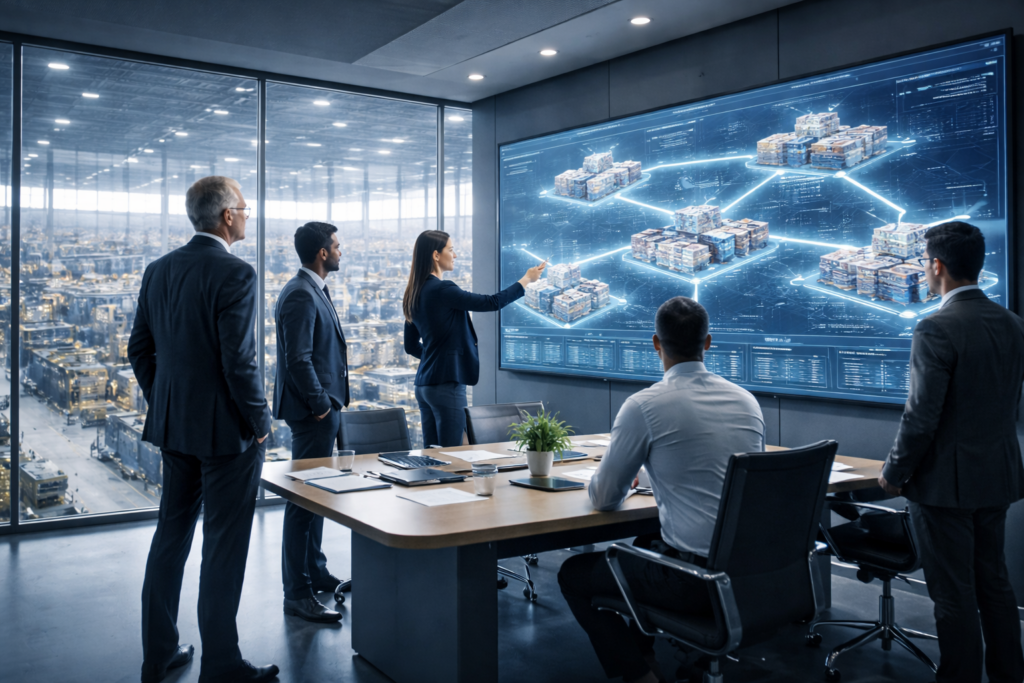
The right deployment strategy makes all the difference
Not all sites are equally complex.
A well-sequenced strategy allows :
- Capitalize on learning
- Mitigate risks
- Generate quick wins
- Establish a reliable cadence
- Enhance knowledge of the customer ecosystem
It also enables the project manager :
- Better plan the following deployments
- Reassure stakeholders
- Maintain a sustainable delivery rate
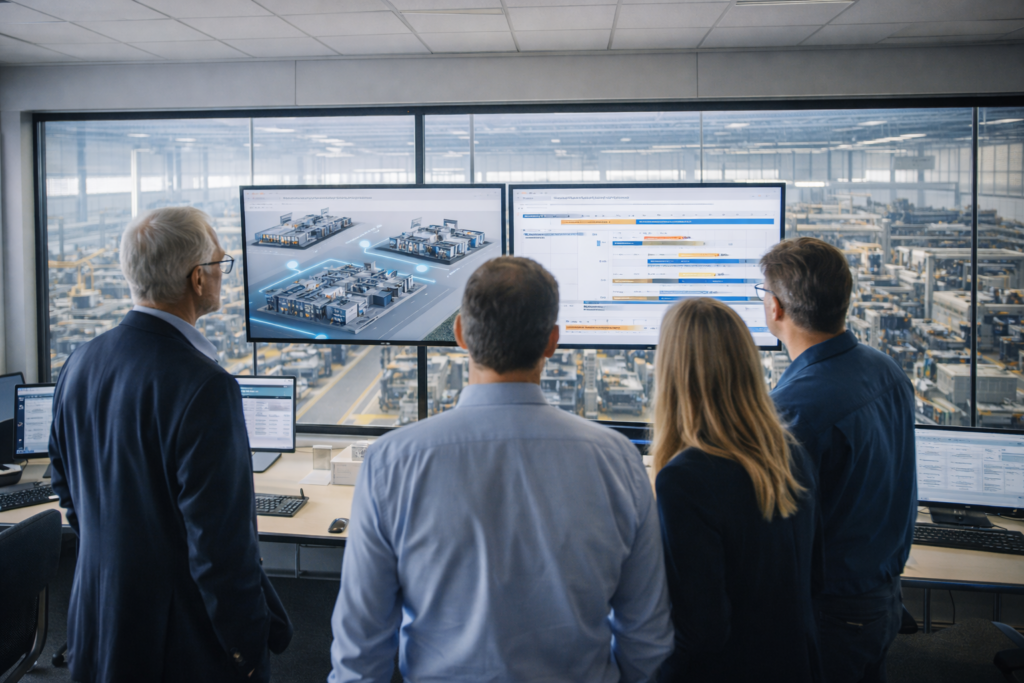
Industry 5.0 = technological maturity + organizational maturity
Industry 5.0 is not simply a technological evolution.
It's a move towards organizational maturity.
A manufacturing project management professional doesn't just deliver a modernized platform.
Its action is based on :
- A clear strategic vision
- An Industry 5.0 roadmap
- Intelligent modernization (no «techno for techno's sake»)
- Business-operations-technology alignment
It initiates, plans, manages, structures, coordinates, brings and integrates into a whole:
- Leadership
- Strategic acuity
- Alignment
- Value delivery
- Range
- Timetable
- Costs
- Risks
- Quality
- Collaboration
- Communications Technology modernizes.
The structure provides security.
Anticipation protects.
Technology modernizes.
Conclusion - An Exercise in Strategic Leadership
The larger the manufacturing organization, the more complex the transformation.
Digital transformation in manufacturing isn't just about modernizing systems.
It involves intervening in a critical, interconnected and fragile ecosystem.
In a multi-site context, complexity is exponential:
- Multiple dependencies
- Heterogeneous environments
- High operational constraints
- Systemic migration risks
- Production continuity requirements
Success lies less in the technology chosen than in the ability to orchestrate the whole with rigor, discipline and an Industry 5.0 vision.
The role of the expert project manager goes far beyond coordination.
It must :
- Understanding business issues
- Anticipating organizational impacts
- Structuring governance and risks
- Orchestrating IT-operations-partner collaboration
- Maintaining strategic alignment
- Delivering lasting value
In an Industry 5.0 environment :
Technology is a catalyst.
Governance is a framework.
Strategic vision is the key to success.
Digital transformation in manufacturing is not just a technical challenge.
It's an exercise in applied strategic leadership.
Need support?
If your organization is planning an industrial modernization, SCADA migration or multi-site digital transformation, a structured, value-oriented approach can make all the difference.
I offer services aimed at :
- Structuring your digital transformation initiatives
- Securing your multi-plant deployments
- Increase the maturity of your project management practices
- Aligning strategy and execution
👉 Visit my services or contact me for an exploratory discussion.
Additional services :
- Lean and Agile support
- Diagnosis of maturity in project management and governance
Together, we can transform your initiatives into real strategic levers.
📩 Contact me at or visit the Services to find out more.
About the author
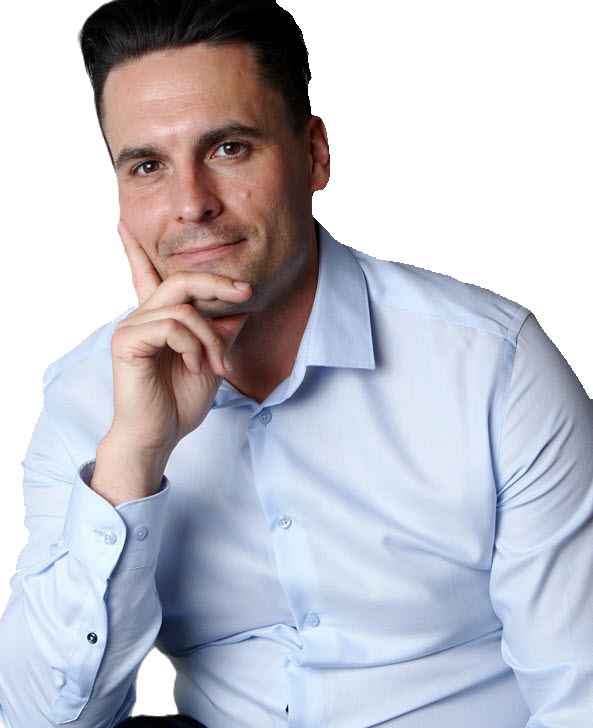
With over 20 years' experience in Information Technology management, Éric Auger helps companies accelerate value delivery and optimize organizational performance. As an IT consultant specializing in project management, Lean Six Sigma Green Belt practitioner, Kanban management expert and agility coach, I combine strategy, tactics and operations to maximize your competitiveness in the digital age.
Passionate about digital transformation, I support organizations in optimizing their value streams, thus guaranteeing a sustainable competitive advantage. I also enjoy sharing my expertise and helping professionals strengthen their project management and agility skills.
Follow me for practical advice and proven strategies to make your projects a success.